On Wednesday afternoon, September 16, a visit to the city of Verona is planned, including entry to two of our city’s museums.
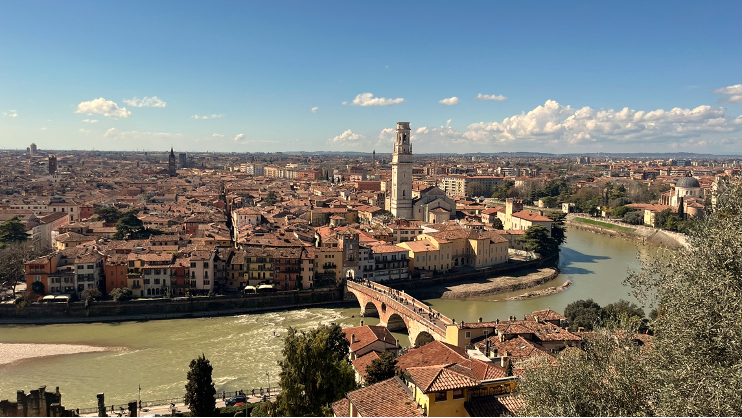
The earliest traces of human presence in the area of present-day Verona date back to the Neolithic period and were discovered on San Pietro Hill, the site where the homonymous castle stands today, providing a stunning panoramic view of the city.
Before the Roman conquest, Verona was inhabited by the Cenomani Gauls and by the Veneti, the latter being considered by the Romans themselves as their kin; according to Pliny’s account in Book III of the Naturalis Historia (Plin. nat. 3, 130), it was Cato the Elder who defined the Veneti as Venetos Troiana stirpe ortos.
Contacts with the Romans can be dated with certainty to the 3rd century BCE and were characterised by a constant relationship of alliance and friendship, as confirmed also by the concession granted in 225 BCE by the local populations to the Romans, allowing them to establish a small garrison on the aforementioned hill of San Pietro for the protection and defence of the city. With the intensification of conflicts during the 2nd century BCE, Verona acquired increasing importance due to its highly strategic position, so much so that by the middle of the century the city was crossed by the main Roman roads.
It was only in the 1st century BCE that Verona became fully integrated into Roman territory. Following the enactment of the Lex Pompeia de Transpadanis in 89 BCE, the city first became a colonia and later, after Julius Caesar granted Roman citizenship to the entire region of Gallia Transpadana, it was transformed into a municipium through the Lex Roscia of 49 BCE, eventually assuming the official name of Res publica Veronensium.
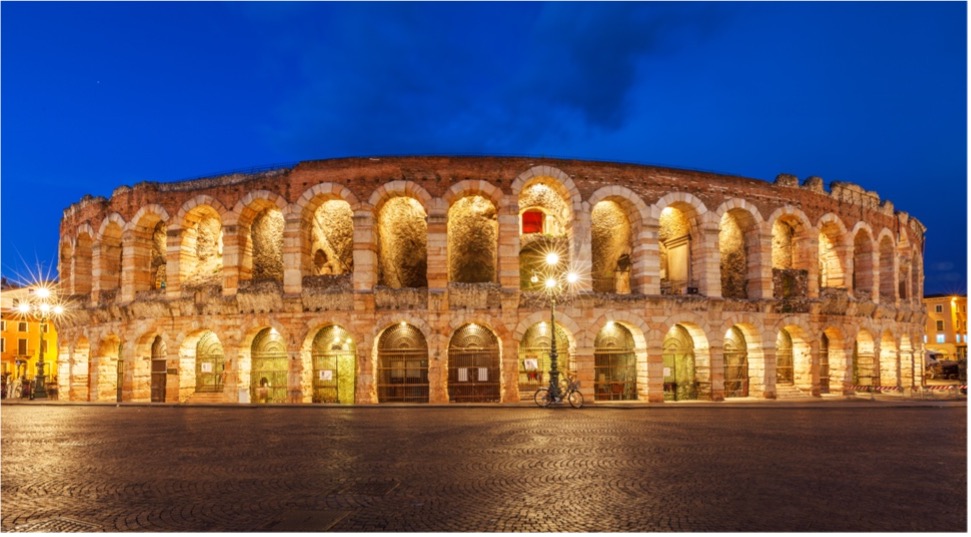
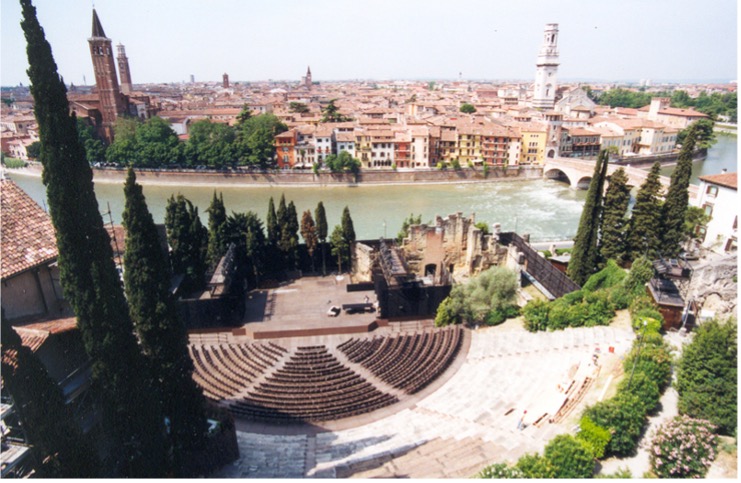
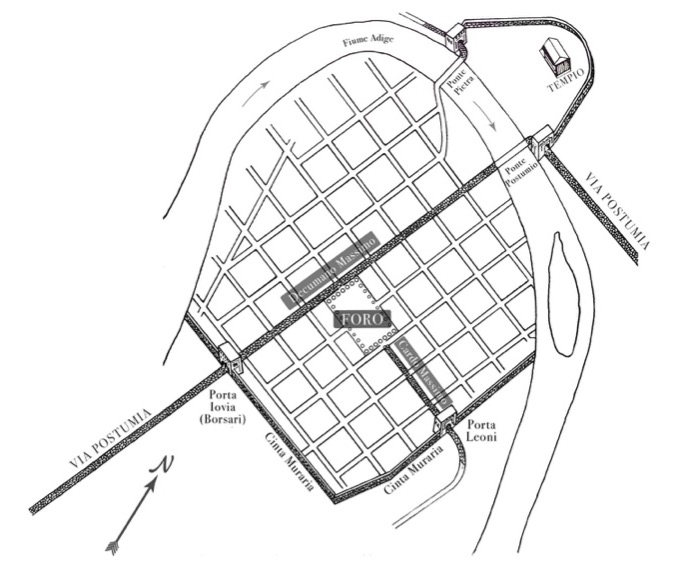
Numerous traces of Roman presence can still be found throughout the territory of Verona, first and foremost the Arena, one of the best-preserved Roman amphitheatres still standing today. Other significant monuments include the Roman Theatre, the Gavi Arch, and Porta Borsari.
Maffei Lapidary Museum:
The Maffei Lapidary Museum founded around the middle of the eighteenth century in the heart of Verona, is one of the oldest public museum institutions in Europe. As its name suggests, the Museum was established through the express initiative of Marquis Scipione Maffei (1675–1755), a Veronese scholar with wide-ranging intellectual interests.
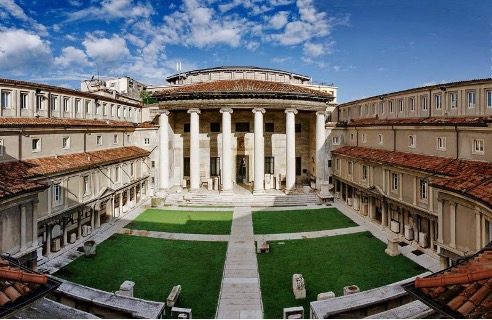
The Museum, whose construction was entrusted to the Veronese architect and painter Alessandro Pompei, houses several hundred inscriptions (both Greek and Latin) as well as other archaeological artefacts collected over more than thirty years of research carried out by the Marquis himself. Maffei subsequently decided to gather these objects in a dedicated space intended not only for their preservation but also, and above all, for their public display.
The distinctive feature of this Museum lies precisely in its public dimension: at a time when private art collections were far more common, and when their contents were often dispersed after the death of their owners, Scipione Maffei chose instead to entrust his collection to the public, asserting that “whatever is useful to the public must be made public property”.
Palazzo Maffei:
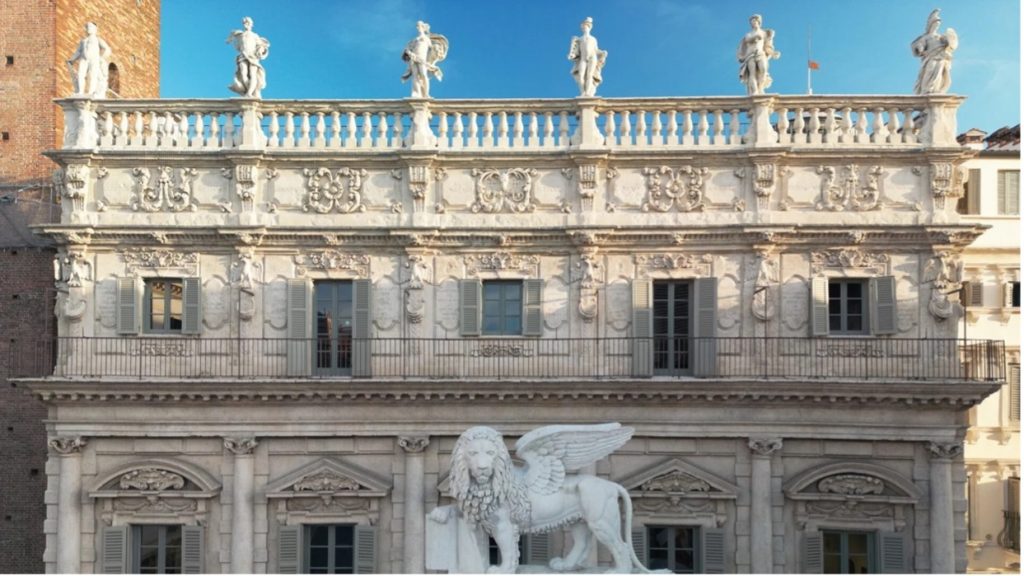
Palazzo Maffei is a Baroque building erected on the site of the ancient Roman Capitolium, close to the intersection of the ancient cardo and decumanus, and it forms the northern side of the present-day Piazza delle Erbe.
Built during the 17th century (1626–1668) on commission from Marcantonio and Rolandino Maffei, two bankers belonging to the aristocratic Maffei family whose activities were centred around the square in front of the building, the palace extends over three floors resting on five arches forming a false portico. It is distinguished by the presence, on the top of the building, of six statues representing Greek deities: Hercules, Jupiter, Venus, Mercury, Apollo, and Minerva.
The interior of the palace preserves a cycle of frescoes inspired by classical themes, probably dating to the transitional period between the eighteenth and nineteenth centuries. In addition, since 2020, the piano nobile has also been home to an exhibition itinerary devoted to the collection of Luigi Carlon, a prominent Veronese collector whose holdings bring together a wide range of prestigious works, extending from antiquity to contemporary art, with particular emphasis also placed on artistic production from Verona and its surrounding area.
The collection features works by several leading figures in the history of modern and contemporary art, including René Magritte, Amedeo Modigliani, Pablo Picasso, Giorgio de Chirico, Marcel Duchamp, and Umberto Boccioni, among others.
Programme and further information:
16 September 2026
The meeting point will be at Palazzo della Gran Guardia, Piazza Bra, at 1:45 p.m.
Programme:
2:00 p.m. – Visit to the Museo Lapidario Maffeiano
4:00 p.m. – Visit to Palazzo Maffei